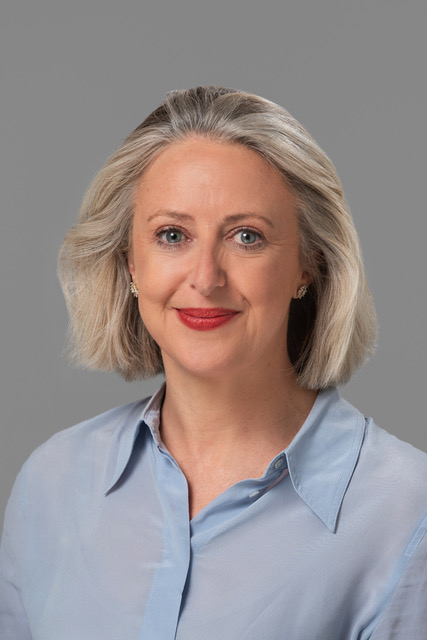
Jenny Crinion
Affiliations
Professor of Cognitive Neuroscience
Institute of Cognitive Neuroscience, University College London
Consultant Speech and Language Therapist
National Hospital for Neurology and Neurosurgery, UCLH NHS Foundation Trust
Abstract
Stroke provides a unique window onto the organisation of human language: by observing what is lost, what is preserved and what changes during recovery, we can begin to understand not only where language functions are represented, but how distributed brain networks reorganise after injury.
In this lecture, I will trace a programme of research that has used cognitive neuropsychology, structural and functional neuroimaging, brain stimulation and treatment studies to investigate the neural basis of language and its recovery after stroke. A central theme has been individual variability. People with apparently similar language impairments can follow very different recovery trajectories and respond differently to the same intervention. Understanding this variation requires moving beyond simple localisation towards considering the integrity, connectivity and adaptive capacity of the remaining language network.
I will discuss how studies of spontaneous and treatment-induced recovery have helped identify the neural systems that support successful language function after stroke, and how this knowledge can inform the design and targeting of rehabilitation. This work has increasingly moved from explaining recovery to actively trying to change it: combining mechanistic neuroscience with intensive, personalised interventions designed to drive experience-dependent plasticity.
Finally, I will describe our translation of these principles into digital neurorehabilitation, enabling people with aphasia to undertake substantially greater amounts of targeted practice beyond the clinic while retaining clinical oversight and personalisation.
The broader challenge is to connect levels of explanation — from damaged brain networks, to behaviour, to individual treatment response — and to use that understanding to build rehabilitation that is both scientifically grounded and deliverable in real-world care.
Biosketch
Jenny Crinion is Professor of Cognitive Neuroscience at University College London and a Consultant Speech and Language Therapist at the National Hospital for Neurology and Neurosurgery, UCLH. She leads the Neurotherapeutics Group at UCL, where her research focuses on the neural basis of language, aphasia and recovery after stroke and acquired brain injury. Her work combines cognitive neuropsychology, structural and functional neuroimaging, network neuroscience, non-invasive brain stimulation and clinical trials to understand why individuals recover differently and how rehabilitation can be made more effective. A major focus of her research is translating mechanistic insights into personalised, high-dose treatments for language recovery after stroke, including digital neurorehabilitation and Intensive Comprehensive Aphasia Programmes (ICAPs). She is CEO and Co-founder of NeuroSpeechAI, a UCL spin-out translating this research into evidence-based neurorehabilitation for routine clinical care.
The link to the event will be active on the day of the conference
Event link