
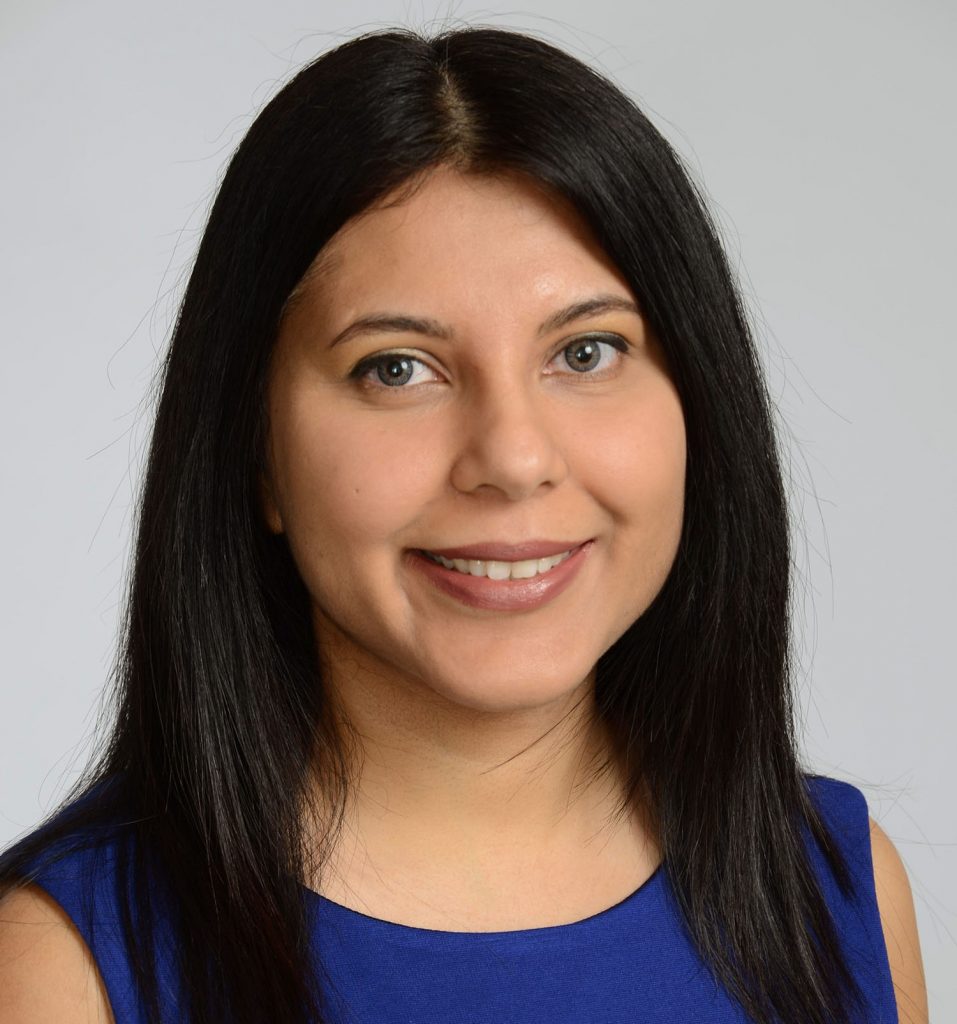
Cerebrovascular diseases play a major role in cognitive decline and are often associated with Alzheimer’s disease. This is precisely the field of research explored by Amanpreet Badhwar, Laboratory Director at CRIUGM and Associate Professor at the University of Montreal. We spoke with her during Alzheimer’s Awareness Month. Passionate and committed, she shared her career path and current research on Alzheimer’s disease. Using innovative approaches combining MRI, artificial intelligence, and blood biomarkers, her goal is to better understand the early stages of the disease and identify promising indicators for early diagnosis.
Can you tell us about your research background?
My research journey began at the Montreal Neurological Institute in the epilepsy unit. I was an undergraduate student at the time, studying different forms of epilepsy by integrating genetics and neurology. I then completed a master’s degree in bioinformatics and genomics at McGill University’s Genome Centre, followed by a PhD in neuroscience focusing on mouse models of Alzheimer’s disease.
My PhD took a highly multidimensional approach. I studied neurovascular coupling, that is, the close relationship between neuronal activity and cerebral blood flow, and its role in Alzheimer’s disease. I subsequently completed a postdoctoral fellowship at the University of Montreal and CRIUGM, where I focused more on human neuroimaging, particularly functional MRI and imaging biomarkers in Alzheimer’s disease. These biomarkers are measurable biological indicators that provide information on brain health.
Why are you interested in Alzheimer’s disease?
When I came to Canada for my studies, a close friend’s father, who had become like a grandfather to me, developed the disease. I am of Indian origin, and at the time, I did not have much family here. Watching the disease gradually change him was difficult—he went from being lively, present, and talkative to someone sitting in the hospital, barely recognizing anyone.
This was my first experience with a neurodegenerative disease, and it was then that I knew I wanted to study aging and age-related neurodegeneration. During my university studies, I gradually refined my focus and determined the topics I wanted to explore, and Alzheimer’s disease became one of them.
What are your research methods?
We study both normal and pathological aging. One of the main challenges in studying Alzheimer’s disease is distinguishing normal aging from pathological aging. Aging is highly variable between individuals—even healthy people age differently. Understanding what healthy brain aging looks like is therefore essential for identifying the earliest signs of the disease. In this context, we analyze data from healthy adults aged 20 to almost 80 years of age. We study how brain structure, cerebral metabolism, cognitive task performance, and blood markers vary with age. This approach allows us to better characterize normal aging trajectories.
In my laboratory, we adopt a so-called multi-omic approach, which involves analyzing multiple types of biological data simultaneously to gain a comprehensive view of the underlying mechanisms of aging and neurodegenerative diseases. For this, we combine advanced neuroimaging methods, such as MRI, with artificial intelligence and machine learning tools to identify complex signatures associated with aging and disease. We also explore innovative technologies, such as virtual reality, to enhance our research toolkit.
Another important aspect is that we pay close attention to participant recruitment, following principles of equity, diversity, and inclusion. We ensure a balanced representation of women and men, as well as diversity in ethnic backgrounds, to make our results more robust, reproducible, and representative of the real population.
Can you tell us about one of your projects?
One of my recent projects aims to identify reliable blood biomarkers to detect cerebrovascular lesions in people with neurocognitive disorders or at risk of developing them, including Alzheimer’s disease. When present, these lesions weaken the brain and can lead to an earlier onset of disease symptoms. The idea is therefore to analyze blood to detect biological molecules reflecting the health of cerebral vasculature. This project is funded by the Canadian Institutes of Health Research (CIHR), and I am the lead researcher responsible for this study.
Additionally, identifying such biomarkers could help improve the safety of current Alzheimer’s treatments, particularly those targeting beta-amyloid protein, which accumulates in the diseased brain and disrupts neuronal communication. These treatments are not always well tolerated in patients with cerebrovascular lesions, who have a higher risk of complications, such as brain edema. The blood–brain barrier, which regulates the passage of molecules and cells from the blood into the brain, may also be compromised.
Currently, these lesions are primarily detected through MRI, an expensive and sometimes difficult-to-access procedure. Developing a blood test could allow for easier identification of at-risk patients and direct them to appropriate examinations and treatments, while reducing strain on healthcare systems.
Are there specific elements in the blood that are more helpful than others?
Yes! In this study, we use multiple layers of analysis. A global blood analysis provides an overview and allows us to detect biological signals indicating vascular impairment. However, blood contains information from the entire body, so we need a way to focus specifically on the brain.
This is why we are particularly interested in extracellular vesicles—small particles released by brain cells and protected by a lipid bilayer. They carry biological molecules that reflect the health of brain tissue, including blood vessels. By isolating these vesicles from the blood and analyzing their contents, we can identify candidate molecules that may indicate cerebrovascular lesions and, ultimately, serve as reliable biomarkers. This test is therefore more accurate than a conventional blood test, as it targets elements that originate specifically in the brain. This approach is innovative and remains underdeveloped to date, and our team is among the first to explore it.
These analyses use data from a longitudinal cohort of the Canadian Consortium on Neurodegeneration in Aging (CCNA), which follows over 1,000 participants over several years. Follow-ups occur at multiple time points, with longitudinal assessments beginning beyond two years. In addition to blood and extracellular vesicle analyses, the project includes the study of brain tissue samples from cohort participants who consented to brain donation after death. This three-tiered approach—whole blood, extracellular vesicles, and brain tissue—ensures that identified biological signals accurately reflect processes occurring in the brain. Ultimately, this work could allow earlier detection of cerebrovascular lesions and improve the lives of people living with cognitive disorders or at risk of them.
What motivates you in research?
I have a thirst for knowledge! I want to understand why things work the way they do. Beyond scientific curiosity, I aim to generate discoveries and knowledge that are clinically useful to improve the quality of life of a rapidly aging population, in Quebec and worldwide. Many people already know, or may one day know, someone in their circle affected by an age-related neurodegenerative disease. Research on Alzheimer’s disease is progressing daily, particularly with the recent emergence of treatments targeting specific disease mechanisms.
What are your short- and long-term goals?
In the short term, I hope that the new biomarkers we are developing can be used in clinical settings. In the long term, I want to help position Canada as a global leader in neurodegenerative disease research, particularly through the CCNA and collaborations with the country’s existing network of scientifically excellent researchers.
I also aspire to advocate to policymakers to make neurodegenerative diseases a priority. I hope to contribute to public policies that affect everyone, in Canada and beyond, to make diagnostics and treatments accessible to as many people as possible, not only to those who can afford them.