Lago Paula
Contact information
Biography
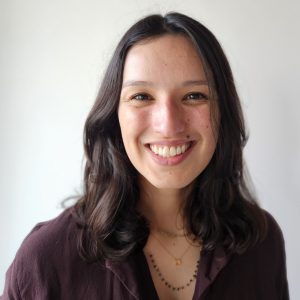
Dr. Paula Lago is an Assistant Professor in the Department of Electrical and Computer Engineering at the Gina Cody School of Engineering and Computer Science at Concordia University in Montreal. She holds a PhD in Software Engineering from Universidad de Los Andes (Colombia) and completed a postdoctoral fellowship in machine learning applied to sensor data at the Kyushu Institute of Technology (Japan). She also holds a master’s degree and a bachelor’s degree in Computer Engineering.
She is recognized for her expertise in pervasive computing (computing that enables interconnected objects to recognize and interact with one another), wearable sensors, and machine learning for human activity recognition. She is a recipient of the ACM SIGCHI Gary Marsden Travel Award and has led several interdisciplinary research projects focused on artificial intelligence in healthcare.
Research interests
Voici une traduction en anglais adaptée à un contexte universitaire et institutionnel :
Research Interests and Program
Dr. Lago’s research program focuses on integrating artificial intelligence, wearable technologies, and heterogeneous data analysis for human behavior recognition and health support, particularly in the context of aging and long-term care.
Main Research Areas
Human Activity Recognition (HAR)
Development of robust deep learning models to automatically detect human routines and behaviors using inertial sensors (IMUs) in naturalistic or assisted environments.
Pervasive Computing and Wearable Sensors
Research on data collected from wearable devices, including signal variability, longitudinal data processing, and device reliability in real-world environments.
Digital Health and Applied Artificial Intelligence
Design of mobile tools that promote health self-reflection (e.g., activity data–based applications), as well as rhythm-based data analysis for longitudinal monitoring, particularly among older adults.
Open Science and Heterogeneous Data Pipelines
Development of architectures for processing and analyzing large heterogeneous datasets in interdisciplinary health research contexts.
Since joining Concordia University in 2021, she has received two institutional grants (FRDP and Applied AI Working Group) totaling $58,000, and currently supervises several master’s and doctoral students working on projects related to activity recognition, longitudinal data, and healthy aging.
Keywords: human activity recognition, wearable sensors, machine learning, pervasive computing, aging, elder care, health monitoring, data pipelines, AI in health, sensor variability